Introduction
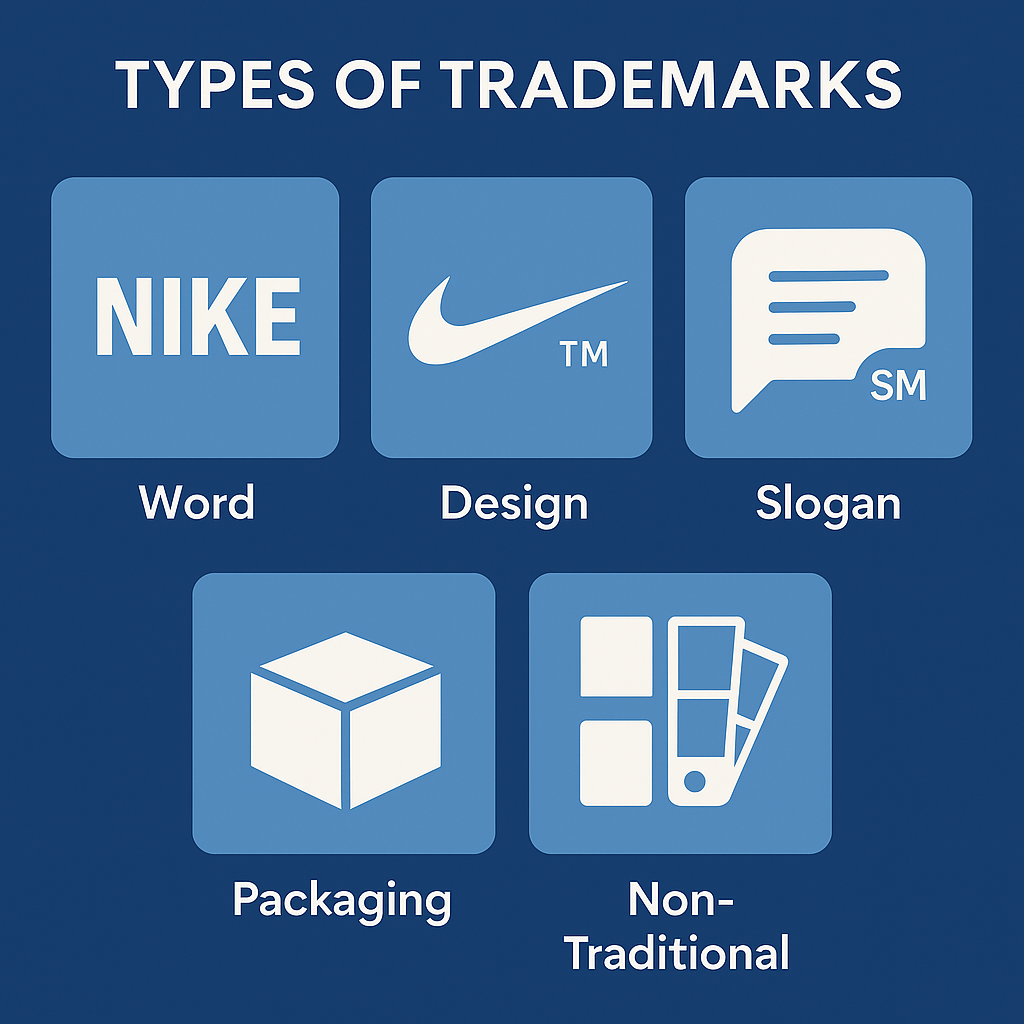
Trademarks are one of the most powerful tools a business can use to protect its identity. While most people think of trademarks as just names and logos, U.S. trademark law recognizes many different forms of brand identifiers — including slogans, colors, sounds, and even packaging. Understanding the types of trademarks available helps businesses select the right strategy for brand protection.
1. Word Marks
A word mark protects a word, phrase, or combination of words in standard characters (without claim to any particular font, style, or design).
-
Examples: Nike®, Google®, Coca-Cola®
-
Why it matters: Word marks provide broad protection, covering use of the word in any design or font.
-
Best for: Businesses that want maximum flexibility in how the brand name is displayed.
2. Design Marks (Logos)
A design mark protects the stylized appearance of a word, logo, or symbol.
-
Examples: The Nike swoosh, the Starbucks siren logo.
-
Why it matters: Protects visual elements, even if the words themselves are generic or descriptive.
-
Best for: Companies with a distinctive visual identity.
3. Combination Marks
A combination mark protects both the wording and design elements together.
-
Examples: McDonald’s golden arches logo with the word “McDonald’s.”
-
Why it matters: Provides coverage for the logo + name as used together, though not separately.
-
Best for: Brands that consistently use their name and logo side by side.
4. Slogans and Taglines
Catchphrases can also qualify as trademarks if they are distinctive and identify the source of goods or services.
-
Examples: “Just Do It®” (Nike), “Because You’re Worth It®” (L’Oréal).
-
Why it matters: Protects unique marketing language.
-
Best for: Businesses that invest heavily in brand messaging.
5. Trade Dress (Product Packaging & Design)
Trade dress refers to the distinctive look and feel of a product or its packaging.
-
Examples: The Coca-Cola bottle shape, Tiffany & Co.’s blue jewelry boxes.
-
Why it matters: Protects brand identity through visual impressions, as long as the design is distinctive and non-functional.
-
Best for: Products with unique packaging or product shapes.
6. Non-Traditional Marks
Beyond words and logos, the USPTO recognizes non-traditional marks if they are distinctive and function as identifiers of source.
-
Color Marks: Tiffany blue, UPS brown.
-
Sound Marks: NBC’s three-note chime, MGM’s lion roar.
-
Scent Marks: Rare, but possible — e.g., floral fragrance for sewing thread.
-
Motion Marks: Animated logos or moving graphics, like the Pixar jumping lamp.
These are harder to register but offer strong, memorable brand protection when approved.
7. Certification Marks
A certification mark is used by authorized businesses to show that products or services meet certain standards.
-
Examples: USDA Organic seal, UL® (safety certification).
-
Why it matters: Ensures compliance with quality or geographic origin standards.
-
Best for: Industry groups or certifying organizations.
8. Collective Marks
A collective mark is used by organizations, associations, or groups to indicate membership.
-
Examples: CPA® (Certified Public Accountant), REALTOR®.
-
Why it matters: Protects the identity of professional groups and associations.
-
Best for: Trade groups, unions, or associations.
Trademark FAQ: Types of Trademarks
-
Is a word mark stronger than a logo? Yes, word marks often provide broader protection.
-
Can I file both a word mark and a logo? Yes — many businesses do both for full coverage.
-
Can a sound or color really be trademarked? Yes, if it is distinctive and identifies the brand.
-
Which type of trademark should I choose? It depends on your brand strategy — many businesses file multiple types.
Conclusion
Trademarks come in many forms, from words and logos to colors and sounds. By understanding the different types of trademarks, you can build a stronger brand protection strategy that fits your business goals.
👉 Ready to safeguard your brand identity? Schedule a consultation with Lewellyn Law, PLLC